Venture capital is in its biggest transformation in decades. Firms once relied on quarterly PDFs and spreadsheet gymnastics to track portfolio performance; today's leading VCs use sophisticated portfolio monitoring platforms that turn raw data into actionable insights. This isn't about abandoning the fundamentals of venture investing—it's about amplifying them with tools that let partners focus on finding and supporting exceptional founders.
The average VC partner now oversees 15-20 portfolio companies, each generating hundreds of data points monthly, while LPs demand more granular, real-time reporting than ever. The firms capturing the best deals aren't just the ones with the biggest checkbooks—they're the ones who can demonstrate superior portfolio support and data-driven decision making. Portfolio monitoring software has evolved from nice-to-have to competitive differentiator, letting firms spot trends faster, support struggling companies earlier, and showcase wins more compellingly.
With modern tools automating data collection and reporting, firms are seeing dramatic efficiency gains and improved LP satisfaction scores. Early adopters already see the benefits: faster investment decisions, better portfolio company support, and more efficient subsequent fundraises. This is the dawn of data-driven venture capital, and today's tools make it accessible to firms of every size.
What Is Portfolio Monitoring Software?
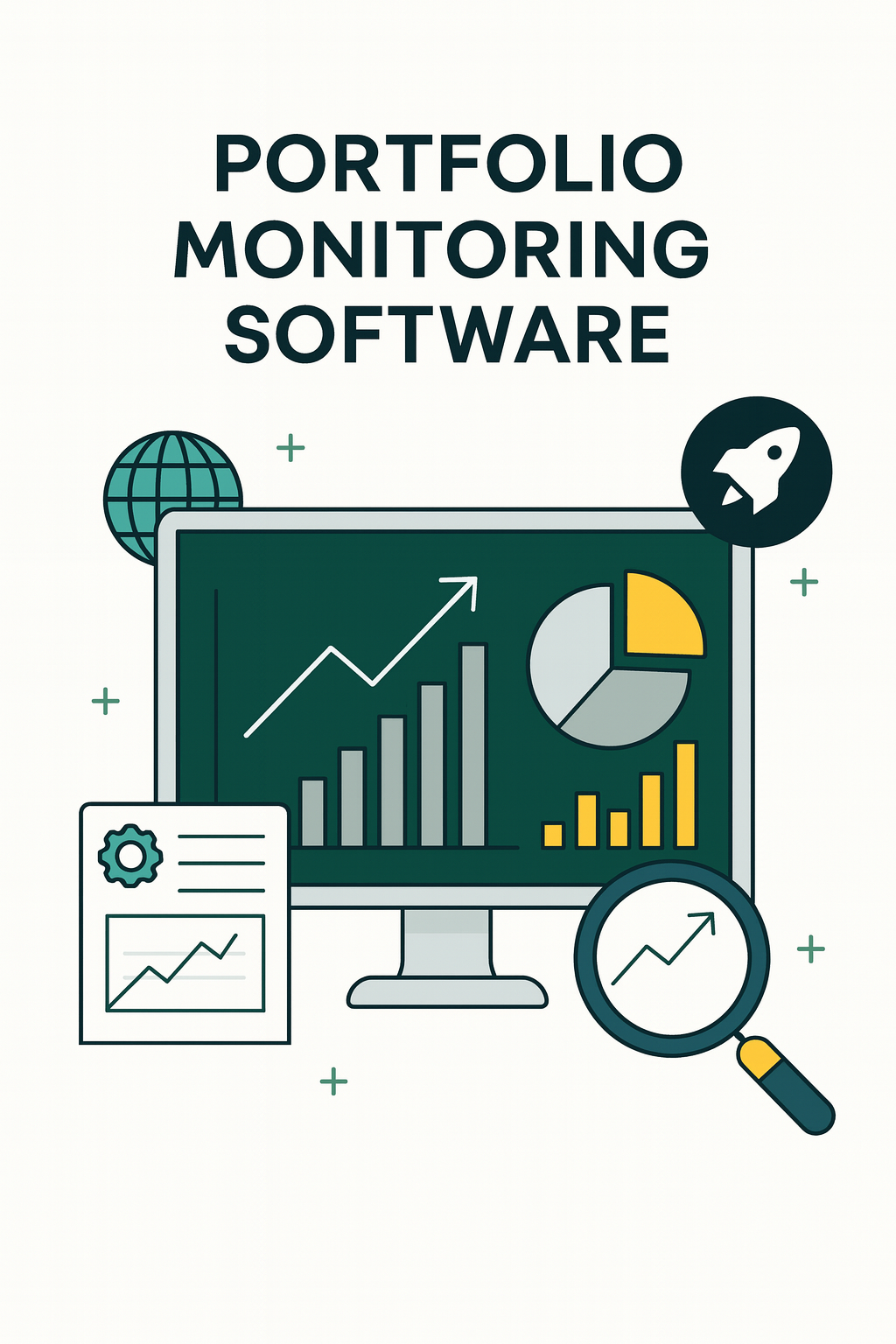
Portfolio monitoring software is a centralized platform that automates the collection, analysis, and reporting of portfolio company metrics, letting VCs track performance, identify trends, and generate LP reports efficiently. Think of it as the command center for your portfolio—a single source of truth that replaces scattered spreadsheets, email threads, and manual data wrangling.
Portfolio monitoring in 2026 is far more sophisticated than basic data collection. Modern platforms are comprehensive ecosystems handling everything from automated data ingestion to AI-powered trend analysis. The distinction matters: entry-level tools help you collect data, but category-defining platforms turn that data into competitive advantage. They're the difference between knowing your numbers and understanding what they mean for your fund's future.
The space is being shaped by three transformative trends that every VC should understand:
- AI-Powered Intelligence: Modern platforms use machine learning to identify patterns across portfolios, flagging outliers and opportunities human analysts might miss—not through keyword matching, but through semantic analysis and embedding similarity algorithms that understand context and relationships
- Two-Way Data Ecosystems: The best platforms facilitate bidirectional data flow between investors and portfolio companies, creating collaborative environments where both benefit from shared insights and standardized metrics
- Automated Integration Networks: Leading solutions connect directly with the tools portfolio companies already use—Stripe, Salesforce, QuickBooks—eliminating manual data entry and ensuring real-time accuracy
Who Needs It (and When)?
Modern portfolio monitoring software scales with your ambitions. For emerging managers running their first $25M fund with 10-15 companies, these platforms offer the foundation for institutional-grade operations from day one. You're not scrambling to build processes when you raise Fund II—you're already operating like a seasoned firm. The platform becomes your unfair advantage when competing for deals against larger funds.
Established firms with 50+ portfolio companies face different opportunities. At this scale, manual processes don't just slow you down—they prevent you from seeing critical patterns across your portfolio. When one of your B2B SaaS companies shows churn patterns similar to a company that struggled two years ago, automated monitoring helps you intervene before it becomes a crisis. Partners spend time coaching founders instead of chasing down monthly metrics.
For multi-fund platforms managing hundreds of investments, portfolio monitoring software becomes the operational backbone of the organization. These firms use advanced platforms to create proprietary benchmarking databases, identify follow-on opportunities through pattern recognition, and give portfolio companies peer insights that would be impossible to generate manually. The best firms even use their superior data infrastructure as a selling point when pitching founders.
The signs you're ready for professional portfolio monitoring aren't about pain—they're about opportunity. When LPs ask for more frequent updates, when you want to better support portfolio companies, when you're ready to make your junior team more efficient, or when you recognize that better data could improve your investment decisions—these are all green lights. The most successful implementations happen when firms view portfolio monitoring as a growth accelerator, not a Band-Aid.
How We Chose the Best Portfolio Monitoring Tools
Selecting the right platform requires understanding the nuanced differences between solutions that look similar on paper. We evaluated dozens of platforms against the criteria that matter most to data-driven VCs, recognizing that the "best" tool depends on your firm's needs and growth trajectory.
Data Collection Sophistication: We prioritized platforms that go beyond manual entry, examining how well each automates data ingestion through API integrations, handles non-standard metrics, and supports two-way data flow between investors and companies.
Intelligence Layer Depth: Raw data is just the starting point. We looked for robust analytics—AI-powered insights, customizable dashboards, automated alerting, and the ability to surface non-obvious patterns across portfolios.
Reporting Flexibility: Every LP has different requirements, and your needs will evolve. We evaluated how easily each platform creates custom reports, whether it supports multiple output formats, and how well it handles complex fund structures.
Portfolio Company Experience: The best monitoring is collaborative. We assessed how each platform engages portfolio companies, whether it provides value back to founders, and how much friction it creates in data submission.
Scalability Architecture: Your platform should grow with you. We examined how each handles increasing data volumes, whether it supports multiple funds, and how pricing scales as your AUM grows.
Integration Ecosystem: Modern VC firms use dozens of tools. We looked at native integrations, API flexibility, and how well each platform plays with popular VC tech stacks including CRMs, communication tools, and accounting systems.
Security and Compliance: With sensitive financial data at stake, we evaluated SOC 2 compliance, data encryption standards, and granular permission controls.
The tradeoffs here are real. Platforms optimized for ease of use may sacrifice customization depth; those with powerful analytics may require more setup time. Some tools excel as comprehensive suites, others dominate specific workflows. Understanding these tradeoffs helps you choose a platform that matches your firm's operational philosophy and growth trajectory.
The 4 Best Portfolio Monitoring Tools in 2026
1. Standard Metrics
Quick Overview
Standard Metrics is the definitive portfolio monitoring platform for data-driven venture capital firms—the only true two-sided ecosystem where investors and portfolio companies collaborate on a unified platform. Built for VC firms from the ground up, it's the system of record for many of the world's leading venture funds that need sophisticated analytics without operational complexity. Its recent AI expansion set a new bar for intelligent portfolio monitoring, using machine learning to surface insights that would be impossible to detect manually.
Best For
Data-driven VC firms managing 20+ portfolio companies who want institutional-grade monitoring with collaborative portfolio company engagement
Pros
- True Two-Sided Platform: Unlike competitors that bolt on company-facing features, Standard Metrics was architected from day one as a collaborative ecosystem where portfolio companies gain value from participation, driving 3x higher data submission rates
- Comprehensive Integration Network: Pre-built connectors to 50+ business tools including Stripe, QuickBooks, Salesforce, and HubSpot enable automatic data submission, reducing portfolio company burden by 85%
- AI-Powered Intelligence Engine: Machine learning analyzes patterns across your entire portfolio, flagging outliers, predicting potential issues 3-6 months in advance, and suggesting interventions based on successful patterns from similar companies
- One-to-Many Data Architecture: Portfolio companies submit data once, and it automatically flows to multiple investors, eliminating redundant reporting and ensuring consistency across syndicate partners
- Purpose-Built for VC Workflows: Unlike adapted PE platforms, every feature is designed for venture capital needs, from SAFE conversion modeling to multi-stage fund tracking
- Robust Benchmarking Database: Access anonymized performance data from thousands of companies, enabling sophisticated peer analysis and data-driven portfolio support conversations
Cons
- Premium Pricing Model: Higher price point than entry-level alternatives, though ROI typically justifies the investment for active funds
- Initial Setup Investment: The platform's power requires thoughtful configuration during onboarding, typically taking 2-3 weeks for full implementation
Deep Dive into Standard Metrics' Capabilities
What sets Standard Metrics apart is its foundational philosophy: portfolio monitoring should create value for everyone, not just investors. When portfolio companies log in, they don't just submit data—they access benchmarking insights, identify improvement opportunities, and generate board-ready reports. This value exchange has solved the age-old problem of portfolio company compliance, with Standard Metrics users reporting 90%+ regular data submission rates against industry averages of 40-60%.
The AI capabilities deserve special attention. Where competitors might flag that revenue declined 10% month-over-month, Standard Metrics' intelligence engine contextualizes that decline against seasonal patterns, industry trends, and the company's historical volatility. It might surface that three other portfolio companies experienced similar declines before major growth inflections, or that the decline correlates with a reversible marketing channel change. This isn't just reporting—it's prescriptive intelligence that helps partners have more valuable conversations with founders.
The integration architecture is another breakthrough. Portfolio companies connect their existing tools once, and data flows automatically to all their investors on the platform. For a typical B2B SaaS company using Stripe for payments, HubSpot for CRM, and QuickBooks for accounting, Standard Metrics automatically pulls and calculates 80% of standard VC metrics with no manual entry. Companies report saving 10-15 hours per quarter on investor reporting—time that goes back into building their businesses.
Standard Metrics has also pioneered collaborative LP reporting. Instead of partners scrambling to compile quarterly reports, the platform automatically generates LP-ready presentations with real-time data, interactive dashboards, and narrative insights. LPs can access a secure portal for on-demand portfolio exploration, cutting partner time spent on routine LP requests. One growth-stage fund reported that Standard Metrics reduced their quarterly LP reporting from three weeks to three days.
2. Visible.vc
Quick Overview
Visible.vc is the entry-level platform of choice for emerging managers and smaller funds wanting straightforward portfolio tracking without enterprise complexity. Originally built as an investor update tool for startups, it has evolved into a lightweight but capable solution that excels at basic metric tracking and simple reporting workflows.
Best For
Seed-stage funds and emerging managers with 10-30 portfolio companies seeking affordable, easy-to-implement monitoring
Pros
- Fastest Implementation: Most funds are operational within 48 hours, with intuitive setup that doesn't require technical expertise
- Competitive Entry Pricing: Starting at $99/month makes it accessible for first-time fund managers and solo GPs
- Clean, Simple Interface: Streamlined design focuses on core metrics without overwhelming users with advanced features
- Basic Company-Side Tools: Offers free basic features for portfolio companies to send updates, though advanced features require company subscriptions
- Email-Based Collection: For companies not ready for full integration, email parsing features can extract metrics from standard investor updates
Cons
- Limited Analytics Depth: Lacks advanced pattern recognition and predictive analytics found in enterprise platforms
- Company Features Behind Paywall: Portfolio companies need paid subscriptions for advanced features, potentially reducing adoption
3. Vestberry
Quick Overview
Vestberry is the platform of choice for European VCs, a solid middle-ground solution with strong adoption across EU funds. Its standout Affinity CRM integration creates a seamless deal-flow-to-portfolio-monitoring pipeline, though its feature set remains less comprehensive than category leaders.
Best For
European VC firms and funds heavily invested in the Affinity ecosystem for deal flow management
Pros
- Best-in-Class Affinity Integration: Deep bidirectional sync with Affinity CRM creates unified deal flow and portfolio management
- GDPR-Optimized Architecture: Built with European data privacy regulations in mind, simplifying compliance for EU funds
- Multi-Currency Support: Robust handling of portfolio companies operating across different currencies and regions
- Strong Valuation Modeling: Sophisticated cap table management and exit scenario modeling tools
- European Market Focus: Better understanding of EU regulatory requirements and reporting standards
Cons
- Limited US Market Penetration: Smaller user base in North America means fewer integration partners and community resources
- Feature Development Pace: Slower rollout of new capabilities compared to larger competitors
4. Chronograph
Quick Overview
Chronograph brings institutional-grade portfolio monitoring from its private equity heritage, making it ideal for later-stage VC funds and growth equity investors who need sophisticated reporting workflows. It lacks portfolio company collaboration features, but its analytical depth and reporting capabilities are unmatched for firms with concentrated portfolios and board seats.
Best For
Growth equity funds and later-stage VCs with concentrated portfolios requiring detailed financial analysis
Pros
- Enterprise Reporting Power: Most sophisticated report builder in the market with institutional-grade customization
- Complex Fund Structures: Handles complicated waterfall calculations, multi-strategy funds, and co-investment vehicles
- Audit-Ready Compliance: Built-in audit trails and SOC 2 Type II compliance satisfy institutional LP requirements
- Advanced Financial Modeling: Sophisticated scenario analysis and portfolio construction tools adapted from PE
- White-Glove Service: Dedicated customer success team helps with complex implementations and custom workflows
Cons
- No Company-Side Product: Entirely investor-focused, requiring manual data collection or separate company engagement tools
- PE-Centric Design: Many features optimized for control investments rather than minority venture stakes
Why Standard Metrics Is Our Favorite Tool for VC Firms
After extensive research across the portfolio monitoring landscape, Standard Metrics is our top choice for venture capital firms serious about data-driven investing. Its foundational philosophy—that portfolio monitoring should create value for everyone, not just investors—is a breakthrough that solves the industry's most persistent challenge.
What distinguishes Standard Metrics is how it has cracked portfolio company compliance. While other platforms struggle with 40-60% data submission rates, Standard Metrics consistently achieves 90%+. Portfolio companies genuinely benefit from participation through benchmarking insights, automated board reporting, and peer comparisons. When founders see tangible value from submitting their data, the entire ecosystem thrives.
The AI capabilities have moved beyond basic anomaly detection into genuinely predictive territory. Where competitors might flag a 10% revenue decline, Standard Metrics contextualizes it against seasonal patterns, industry trends, and historical volatility across similar companies in your portfolio. The system can identify that three other portfolio companies experienced similar patterns before major growth inflections, or correlate the decline with specific, reversible marketing channel changes.
For venture capital firms managing 20+ portfolio companies who want institutional-grade monitoring with genuine portfolio company collaboration, Standard Metrics stands alone. The combination of sophisticated analytics, two-sided value creation, and comprehensive automation makes it the clear choice for funds at the forefront of data-driven venture capital.
FAQs
What is portfolio monitoring software for VCs?
Portfolio monitoring software automates the collection, analysis, and reporting of portfolio company performance data. These tools replace manual spreadsheet tracking with integrated systems that pull data directly from portfolio companies' business tools, analyze trends, and generate LP reports automatically. Modern platforms go beyond data collection to provide predictive analytics, benchmarking insights, and collaborative workflows between investors and founders. The best solutions create value for both sides—helping VCs make better decisions while giving portfolio companies actionable insights about their own performance.
How do I choose the right portfolio monitoring tool?
Start by honestly assessing your firm's maturity and needs. If you're a first-time fund manager with 10-15 companies, an entry-level solution like Visible.vc may be perfect for establishing basic processes. For established funds seeking competitive advantage through data, platforms like Standard Metrics offer the sophisticated analytics and automation that justify higher costs. Weigh three factors: how much friction the platform creates for portfolio companies (lower is always better), whether the analytics match your investment thesis complexity, and how well the platform will scale. The most expensive mistake isn't choosing the wrong platform—it's outgrowing your choice and having to migrate data later.
Is Standard Metrics better than Visible.vc?
Standard Metrics and Visible.vc serve different segments well. Standard Metrics is superior for established funds that need sophisticated analytics, automated data collection, and true portfolio company collaboration; its AI-powered insights and two-sided architecture provide capabilities Visible.vc doesn't offer. But Visible.vc remains an excellent choice for emerging managers who need basic tracking without complexity or significant cost. The question isn't which is objectively better, but which matches your fund's current needs and growth trajectory. If you're managing 20+ companies and competing for top-tier deals, Standard Metrics' advanced capabilities justify the premium pricing.
How does portfolio monitoring relate to deal flow management?
Portfolio monitoring and deal flow management are complementary disciplines that increasingly overlap in modern VC operations. Deal flow platforms like Affinity focus on sourcing and managing potential investments; portfolio monitoring takes over post-investment to track performance and support companies. The most sophisticated firms integrate these systems—using portfolio performance data to inform future investment decisions and identify follow-on opportunities. Some platforms like Vestberry integrate both functions, while others like Standard Metrics excel at monitoring but require integration with separate CRM systems. The key is smooth data flow between systems to avoid silos.
If I'm successful with spreadsheets, should I invest in portfolio monitoring software?
Success with spreadsheets often masks hidden inefficiencies and missed opportunities. Spreadsheets may work for tracking basic metrics across a small portfolio, but they can't provide the pattern recognition, automated alerting, and predictive analytics modern platforms offer. More importantly, manual processes don't scale—what works for 10 companies becomes unwieldy at 30 and impossible at 50. The question isn't whether spreadsheets are failing, but what opportunities you're missing. Can you instantly benchmark a company against hundreds of peers? Predict which companies need intervention three months out? Generate LP reports in hours instead of weeks? Modern platforms aren't about fixing what's broken—they're about amplifying what's already working.
How quickly can I see results from portfolio monitoring software?
Implementation timelines vary by platform and fund complexity. Entry-level solutions like Visible.vc can show value within days—you'll have basic dashboards running and initial company data flowing within a week. Comprehensive platforms like Standard Metrics typically require 2-3 weeks for full implementation, including integration setup and historical data migration. But the real value compounds over time. Most funds report saving 40+ hours on reporting after three months. After six months, pattern recognition and benchmarking start delivering insights that directly impact investment decisions. The highest ROI comes after 12 months, when you have enough historical data for meaningful trend analysis and predictive modeling.
What's the difference between VC and PE portfolio monitoring tools?
The differences are substantial and often overlooked. PE-focused tools like Chronograph assume control positions, quarterly board meetings, and detailed financial reporting access. They excel at complex financial modeling and operational analysis but often lack features critical for VC workflows. VC-specific platforms understand that you're monitoring 50+ minority investments with varying data quality, rapid scaling dynamics, and founders who view reporting as a distraction. They emphasize automation, founder-friendly interfaces, and early-stage metrics like burn rate, runway, and growth efficiency. While PE tools can work for later-stage VC funds, early-stage investors almost always benefit from purpose-built VC solutions.
What are the best alternatives to Chronograph for venture capital firms?
For VC firms considering Chronograph, Standard Metrics is the most compelling alternative, offering superior portfolio company engagement while matching Chronograph's analytical sophistication. Its two-sided platform solves Chronograph's biggest weakness—the absence of company-side features—while providing VC-specific workflows that Chronograph's PE heritage lacks. AI-powered insights and automated data collection make it especially attractive for funds that want institutional-grade monitoring without the operational overhead. Firms that absolutely need PE-style reporting depth will still value Chronograph, but most VC funds find Standard Metrics delivers better overall value through its combination of sophisticated analytics and collaborative portfolio company features.